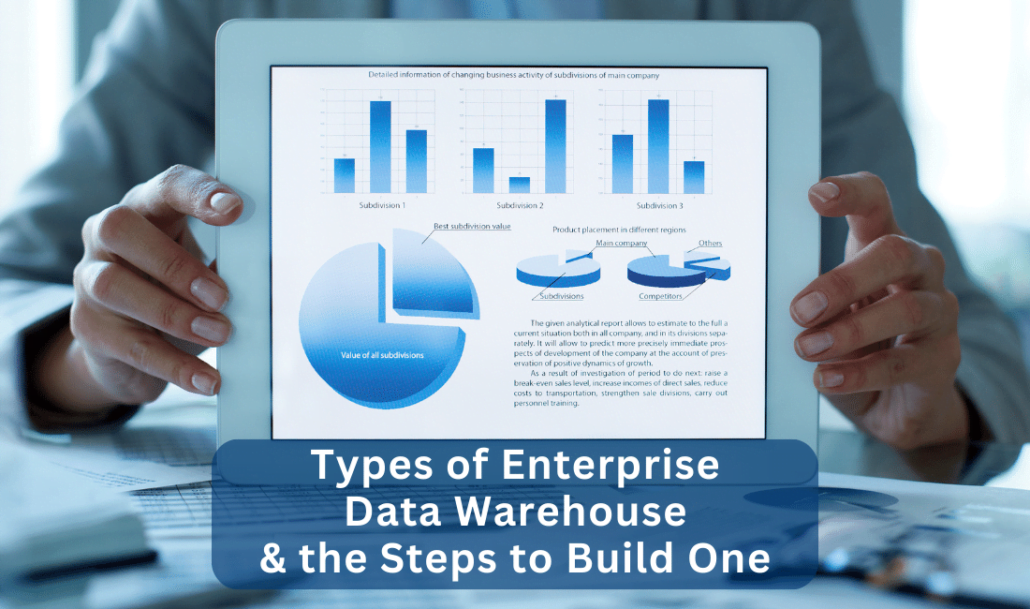
To remain competitive, modern organizations must be agile and make decisions based on data rather than instinct. Unfortunately, business-critical information is often scattered in multiple locations and managed by unconnected employees. As a result, managers need a complete view of the organization and are fragmented in their thinking.
The sales department is responsible for customer relationships, revenue, and other data management. When it comes to successful customer programs, support is critical. The procurement department is also skilled in supply chain management, among other things.
The ultimate goal is to find the single source of truth. To do this, they need systems that allow them to make data-driven decisions and find information quickly. They must also integrate data from different sources for centralized analysis and business intelligence (BI). An enterprise data warehouse (EDW) can help achieve these goals.
What Is an Enterprise Data Warehouse?
An enterprise data warehouse is a central place where companies store and process large amounts of structured and unstructured data from heterogeneous sources. It is designed to provide a consolidated view of enterprise data for analysis and decision-making and to meet business intelligence, analytics, and reporting requirements.
The enterprise data warehouse (EDW) data management architecture is designed to process, store, and analyze large volumes of data from various sources. The EDW is a single data warehouse that authorized individuals can access throughout the enterprise.
The primary purpose of EDW is to help organizations gain knowledge and insight from their data by combining data from different sources into a single system. EDWs provide a complete and holistic view of an organization’s performance, enabling informed strategic decision-making.
Types Of Enterprise Data Warehouse Solutions
They use essential tools and solutions to process and convert data into a format accessible to EDW software. The enterprise data warehouse uses several software scripts to merge raw data into a consolidated format. Enterprise data warehouse solutions typically use three different development environments.
On-premise
Here, the organization purchases the hardware and software required to build, deploy, and manage the data warehouse.
Advantages
Complete control of the data warehouse: The internal data team has access to all hardware and software components and can optimize them in case of failure. This means that the internal IT team is responsible for data security.
Ease of access: All EDW data is stored in a location independent of internet access, which means data is secure online and offline.
Data compliance: A local data archive helps ensure compliance with standardized data protocols.
Disadvantages
Full accountability: The company is fully responsible for building and maintaining the on-premise data warehouse.
Scalability issues: To meet the growing demand for data warehouses, organizations must purchase additional hardware, which can be a significant burden.
Cloud Hosting Services
In this scenario, the company provides the EDW system via the cloud, eliminating the need to purchase and maintain hardware and software.
Advantages
Lower costs: No hardware to buy, manage, and deliver. There is no need to pay for software when using cloud EDW.
Scalability: If data is stored in the cloud, you can scale up or down without compromising system performance.
Disadvantages
Risk of budget overruns: Rapid growth in demand often leads to cost overruns as more storage space is required.
Data compatibility: Although most cloud providers offer security measures, some organizations prefer to store sensitive data on-premises in EDW systems.
Hybrid
As the name suggests, it combines cloud and on-premise EDW.
Advantages
Flexibility: Combines cloud resources’ flexibility with the data warehouse’s flexibility.
Data compliance: Meets all compliance standards and ensures secure data storage.
Disadvantages
Costs of DWH: Need to cover the costs of operation and maintenance and cloud service costs.
Starting An EDW In Four Easy Steps
Getting started with EDW can be tricky. We’ve developed a simple four-step process to help you easily transition from a database to an enterprise data warehouse:
Create a short list of EDW providers using the types of EDW solutions described above.
Decide whether to start from scratch or migrate your data to the new EDW platform.
Define the success criteria.
Prepare a proof of concept for each provider on your list and compare it with the success criteria.
Conclusion
This article outlines the many benefits of implementing a data warehouse in your organization. Data warehouses can help you ensure regulatory compliance, manage large volumes of digital information, and speed up reporting by bringing together disparate data sources.
Existbi offers various data warehouse services for customers in different industries and with additional needs. Don’t hesitate to reach out to our team, as we look forward to helping our customers grow.