It is a very rational query. Also, this question brings confusion.
On the one hand, data warehouse technology is experiencing explosive growth in cloud platforms. New vendors are constantly coming on the scene. A lot of money is involved. On the other hand, data lake solutions are in the news; Big Data, AI, and Machine Learning, all over the place.
So who prevails? Is the data warehouse obsolete? Is it something else entirely? The truth is, neither will replace the other. They both continue to develop – the boundaries between them blur every day.
This guide will explain everything—in simple, plain language, without any buzzwords.
What Is a Data Warehouse?
Data warehouses are centralized repositories of business data, stored in well-organized formats.
They collect data from your CRM, ERP, accounting software, and various applications. All of this is combined into a single repository in a refined, well-organized state, which is useful for reporting and analysis.
Data warehouses have been around for decades. And their use will continue to grow. In fact, they are becoming more powerful than ever.
What Is a Data Lake?
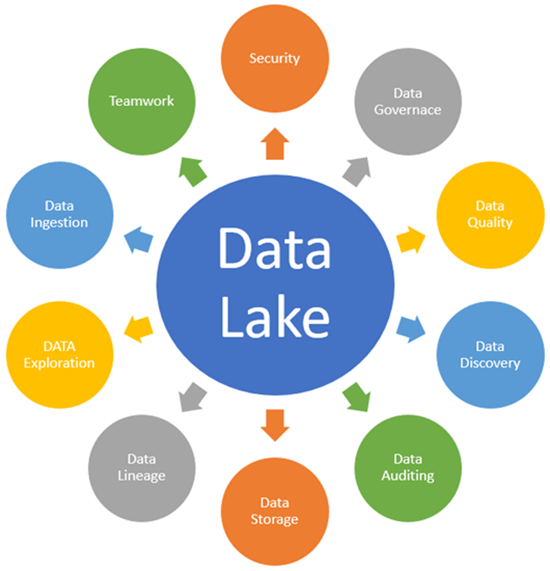
A data lake stores everything. Structured data and unstructured data are similar.
Text files, images, videos, logs, and JSON files – all in their original form and without any conversion beforehand.
A data lake is more flexible than a data warehouse. But it can get dirty quickly. Without proper structure, it becomes what people call a data swamp.
Data lakes are great for AI and machine learning, as they store the large, diverse datasets these models need.
Is the Data Warehouse Being Replaced?
Absolutely not! Data warehouses have experienced wave after wave of success. Remove the device as soon as it comes out. Once the cloud data warehouses enter the scene, they land again. Snowflake has established itself as one of the fastest-growing software companies.
There is no organization these days without at least one data warehouse. Most companies have different data warehouses. Each serves a specific downstream app, segment, or need.
The data do not support the idea that data warehouses are passive.
How Data Lake Solutions Are Changing the Picture?
This is where it gets exciting. The data lake is not superseding the data warehouse. The data lake is evolving into a version of the data warehouse.
A modern data lake performs many of the functions that a data warehouse performs:
- It stores curated and cleaned datasets
- It can do structured queries and reports
- It runs the AI and machine learning pipeline
- It provides access control and governance capabilities
- It serves batch and real-time data use cases
AWS understands this. Amazon Web Services has created AWS Lake Formation specifically for this purpose. It is a platform built to host and manage data for both decision-making and AI-driven applications. It looks like a data warehouse. And it acts like a data warehouse. AWS says so themselves.
Similarly, Delta Lake comes with Databricks. Delta Lake provides the framework on top of a data storage service. It can perform ACID transactions and rollbacks. It handles both batch and streaming data use cases. It is a data warehouse, but for all intents and purposes, it is called Delta Lake.
The Rise of the Lakehouse
If data lakes are slowly starting to resemble data warehouses, what will we call them? It is called Lakehouse.
Lakehouse combines the strengths of both systems. It has the flexibility of a data lake and the structure and performance of a data warehouse — all in one system.
Traditional data lakes could provide some storage, but were not very user-friendly. Data warehouses were structured and fast, but limited. Lakehouse solves both these problems.
And here are some of the benefits of a lakehouse:
- Support for structured and unstructured data
- SQL queries as fast as data warehouses
- Big AI and ML support, like data lakes
- ACID transactions for data integrity
- One system instead of two
Delta Lake by Databricks was designed around the lakehouse concept. Hive 3 by Apache incorporates ACID transactions to better align with a lakehouse.
How AI Is Driving the Change
This is important to realize. The data warehouse of artificial intelligence is endless. On the contrary, it is evolving.
Traditional data warehouses were meant for one purpose. To store clean, structured data. Serving business intelligence and reporting needs.
This is good. However, AI needs more. AI requires a lot of data—structured and unstructured data, historical and real-time data, curated and raw data.
Next-generation data warehouses now do two things. It stores curated data for reporting needs. It also maintains the data pipeline that feeds the AI model.
Decision support and decision automation in one package. This is what the future holds for the data warehouse.
What This Means for Your Business
You don’t have to choose between a data lake and a data warehouse. The question to ask is: What do you need from your business now?
If your priority is accurate reporting and BI, a cloud-based data warehouse is where to start. Snowflake, Azure Synapse, Amazon Redshift, and Google BigQuery work great here.
However, if you need machine learning and AI on top of that, you should go for the Lakehouse approach. Databricks, Microsoft Fabric, and Delta Lake were designed for such needs.
If you are unsure which solution to choose, it is better to start with an analysis. List your data source and use case, and then select Architecture.
How ExistBI Can Help
The company has been building data warehouses since 2008. They are completely platform agnostic and include platforms such as:
- Snowflake
- Microsoft Azure Synapse
- Microsoft Fabric
- IBM Db2 Warehouse
- Amazon Redshift
- Google BigQuery
- Databricks and Delta Lake
- The Hive/Hadoop ecosystem
This means that they find the best option for you and your data. They cover the entire process: strategy, architecture, management, building, migration, testing, and deployment. Hence, ExistBI can be your most reliable partner for implementing these storage technologies.
Summary
Data lakes are not replacing data warehousing. They are growing toward each other.
The data warehouse is at the heart of almost all corporate data strategies. It enables business intelligence. It informs decision-making. It provides governance and compliance.
It has, however, evolved. Today’s data warehouses support AI workflows. They can work with unstructured data. They exist in the cloud. They can scale in seconds.
Lakehouse completes the evolution by filling in the last remaining void. A system where everything is. Both structured reporting and AI from one data source.
The data warehouse is not going away. It has never been stronger.