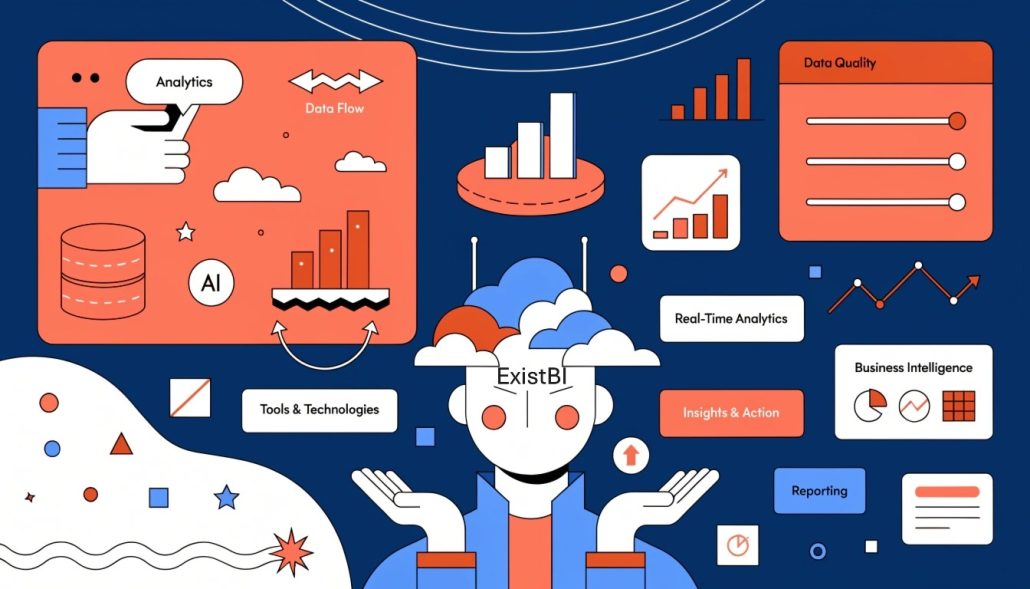
In the era of an interconnected digital world, data is a critical resource. This resource makes your business great, or vice versa, all depends on your successful analysis and finding insights. Companies that effectively leverage big data are gaining a competitive edge, delivering better customer experiences, and making better decisions very fast. Having a clear Big Data Strategy is essential for turning data into insights and creating a data-driven culture.
Big Data Strategy
What is a Big Data Strategy?
A detailed approach to how an organization acquires, stores, processes and uses large sets of structured, semi-structured, and unstructured data is known as Big Data Strategy. Data collection is not the goal of an organization. Big Data Strategy ensures that data is not only collected but also harnessed to inform business decisions and drive innovation, productivity and growth.
This strategy brings features like data analytics, data governance, data platforms, business intelligence (BI) and artificial intelligence (AI) to form a data ecosystem.
The Importance of Creating a Data-Driven Business
In today’s world, Data is your strength, and it can help you to reach your goals.
Data-driven organizations enjoy a number of advantages, such as:
Better Decision-Making: Real-time data enables quicker, more informed decisions.
Better Customer Experience: Data analytics insights (e.g., graphs, charts and other information) help better understand customers.
Operational Efficiency: Analytics and automation cut costs and improve efficiency.
Competitive Advantage: Data-driven companies adapt quickly to market changes.
Indeed, companies are now increasingly adopting predictive analytics, machine learning and cloud data warehouses to gain a competitive edge.
Key Components of a Successful Big Data Strategy
There are several strategies to implement a data-driven business using Big Data.
1. Clear Business Objectives
A big data strategy starts with a clear understanding of your business objectives. This could boost revenue, enhance customer retention, or streamline processes, among other things.
2. Data Governance and Quality
Data must be correct, safe, and trustworthy to achieve veracity. A solid data governance approach assures:
- Data consistency
- Compliance with regulations
- Enhanced data security
A common thing is that “the better the data, the better the output“. Accurate data results in reliable insights, which are essential for decision-making.
3. Scalable Data Architecture
Businesses need to be agile today. Cloud data warehouses, data lakes and lakehouse technology allow effective storage and processing of large volumes of data.
Key trends comprise:
- Cloud Migration for scalability
- Hybrid Data Architecture for flexibility
- Real-time Data Processing for instant insights
4. Advanced Data Analytics
Data analytics is the fuel that powers data. Businesses are leveraging:
- Descriptive Analytics (what happened)
- Predictive Analytics (what will happen)
- Prescriptive Analytics (what should be done)
By incorporating AI analytics and machine learning, companies can determine hidden patterns and make more accurate predictions.
5. Business Intelligence (BI) Tools
Business Intelligence (BI) is responsible for making your data into business reports and other actionable insights. The BI tools are essential for the necessary data transformation. Interactive reporting and dashboards allow for:
- Monitor KPIs
- Identify trends
- Make informed decisions
Self-service BI tools are also helping non-technical people to explore and analyze data on their own.
6. Data Integration and ETL Processes
Companies often have various data, and this data originated from diverse sources. Data integration and ETL (Extract, Transform, Load) methodologies facilitate smooth data exchange between systems, allowing for integrated information.
7. Data Culture and Leadership
Though this is a technological issue, technology is not sufficient to create a data-driven culture. It relies on a cultural transformation in which:
- Employees trust and utilize data
- Management facilitates data usage
- Teams are qualified in data literacy
Data culture is crucial to the success of your business and achieving goals.
Steps to Build a Data-Driven Organization
There are several steps to develop an impactful data-driven business. These steps include:
Step 1: Understand Data Maturity
Review your current data capabilities, systems and processes. Evaluate data management, analytics and governance.
Step 2: Develop a Data Strategy Roadmap
Develop a strategy that links data initiatives to business objectives. This involves selecting appropriate technologies, tools, and platforms.
Step 3: Adopt New and Emerging Technologies
As big data contains vast amounts of information about your business, it cannot be handled with general-purpose technology. Use the latest technologies, such as:
- Data in the Cloud (AWS, Azure, Google Cloud)
- Big Data Tools (Hadoop, Spark)
- Data Visualization (Power BI, Tableau)
These tools provide scalability and real-time data processing for your organization.
Step 4: Govern and Secure Data
Create necessary and functional policies for data quality, privacy and compliance. This is specifically important with growing data privacy regulations.
Step 5: Focus on a Data Team
Employ and train experts such as:
- Data Engineers
- Data Scientists
- BI Analysts
It’s important to build a team to execute the data strategy.
Step 6: Data Democratization
Democratize data across the enterprise. Self-service BI tools allow personnel to access and utilize data without IT support.
Step 7: Continuously Optimize
A Big Data Strategy is a continuously evolving process. Continuously assess and optimize, adopt technological advancements and enhance workflows.
Big Data Strategy: The Latest Trends in 2026
To remain competitive, organizations need to adapt to trends:
- AI-Driven Analytics: Machine Learning for Automated Insights
- Data Lakehouse: Flexible data lakes with the structure of warehouses
- Real-Time Analytics: Analytics in real-time for faster insights
- Data Fabric: Integrated data across environments
- Data Ethics: Increasing focus on ethical data practices
These trends show a shift towards smarter, scalable and ethical data management.
Challenges in Implementing a Big Data Strategy
Big data supports your business and helps you achieve your goals.
In spite of the advantages, there are potential challenges in implementing a strategy for big data, including:
- Data silos and integration issues
- Insufficiency of proficient professionals
- High implementation expenses
- Data safety and compliance circumstances
The key to addressing these challenges is a well-planned strategy, leadership and technology partnerships.
In Summary
Your data is the key to your business’s success. Creating a data-driven enterprise is essential to survival and growth in the current world. An effective Big Data Strategy enables an organization to harness the power of its data, fuel innovation, and gain a competitive advantage.
By prioritizing data governance, state-of-the-art analytics, cloud computing and data culture, companies can turn data into insights and actionable plans.